May 20, 2026
May is the, “It’s finally time!” month for Great Lakes dock owners. It is time to transition from winter concern to spring preparation. Whether you are on Lake Michigan or the Bay of Green Bay the harsh winter likely left your shoreline needing some attention.
Here is your essential May purchase and to-do list to get your waterfront ready for summer.

1. Dock Inspection & Hardware Replacements
Before reinstalling docks or lifts inspect everything for rust or damage.
- Corrosion-Resistant Hardware: Purchase stainless steel or hot-dipped galvanized bolts, fasteners, and brackets.
- Dock Cleats & Bumpers: Upgrade to heavy-duty cleats and add new PVC or rubber bumpers to protect your boat and dock.
- Foot Pads & Leg Kits: Replace damaged leg posts or add new foot pads for stability.
- Replacement Rollers/Wheels: If you have a roll-in dock, check that the tires are still functional.
- Structural Sections: If you need to replace pier sections or extend your pier into deeper water, order now to avoid delays.


2. Shoreline & Safety Upgrades
- Dock Lighting: Solar-powered LED lights are a great option for safety and to mark your dock after dark.
- Dock Box: A weatherproof dock box is essential to store life jackets, tools, and cleaners on-site.
- Ladders: Now is a good time to add new ladders to your dock or seawall. Inspect current ladders to ensure they are secure for swimmers. Complete any repairs before summer.
- Erosion Control: Inspect for erosion or washouts. Protecting your property during lower water years can save money and stress later.


3. Boat Lift and Mooring Gear
- Lift Covers & Canopy: Inspect your boat lift canopy. Replace worn covers to protect against harsh summer sun.
- Mooring Lines & Bumpers: Buy new 5/8-or-1/2-inch nylon dock lines and marine-grade fenders or bumpers to handle shifting water levels.
4. What to bring to the pier before heading out on the lake.
- Sun Protection Comes First: Even on cooler days, the sun reflecting off the water is no joke. Always stock up on high-SPF sunscreen, polarized sunglasses, and a good hat. You’ll thank yourself later when you’re not heading home looking like a lobster.
- The “Just in Case” Boating Kit:
- Extra dock lines
- A basic tool kit
- Spare fuses and a flashlight
- First aid supplies
- The Small Stuff That Saves the Day:
- Lip balm with SPF
- Bug spray for early mornings or evenings
- Dry-bags for valuables
- Extra towels or a change of clothes
Beat the Rush
Local dock specialists (like Pier and Waterfront Solutions) get fully booked in May.
- Schedule Professionals: Pier and waterfront Solutions service can install your docks or lifts, call immediately to secure your spot.
- New and Used Markets: Pier and Waterfront Solutions can provide new and used dock sections or lifts.
May is prime prep season on the Great Lakes. Water levels are rising and summer is coming! Prepare now before traffic ramps up!
Contact Pier & Waterfront Solutions today at 920-493-4404
Our Hours:
Mon–Fri: 8am – 4pm
Saturday: By appointment
Sunday: Closed

Feb 27, 2026
Ice lifting (or “ice-jacking”) causes significant damage to Wisconsin piers when freezing water expands and adheres to pilings, pulling them from the lakebed as water levels fluctuate. This often destroys docks and boat lifts, particularly on larger lakes necessitating removal, de-icers, or specialized, heavy-duty structures to prevent damage.

Ice jacking occurs when the water rises to a higher level, freezes, and then recedes, leaving a layer of ice along the high-water mark. As the water settles, it freezes again, leaving another layer of ice. As the water rises again, it breaks the second level of ice and pushes it into the first.
The process is similar to jacking up a car to change a tire, hence the name, “ice jacking.” If ice jacking is allowed to persist, pressure will increase, and it can eventually lift your dock enough to pull the pilings out of their foundation, and sometimes even snap them in half.


The Ice Jacking Progression
- Freezing and Gripping: As water temperatures drop, ice forms around a pier leg or piling, locking it firmly.
- Water Level Change: The water level rises due to wind or lake ice expansion forcing water up through cracks. The ice sheet rises with it, pulling the pier leg up.
- Refreezing: As the water level recedes or the ice settles, the ice freezes at a new position around the piling.
- Repetition: This cycle repeats throughout the winter, gradually “jacking” the post out of the lake bed.
Common Causes and Effects
- Water Level Fluctuations: Tides are a common cause of lifting on the coast. In the Great Lakes region, wind and rapid weather changes or manual water regulation (dams) can cause similar fluctuations.
- Ice Expansion: When water turns to ice, it expands by approximately 9-10%. This puts massive pressure on the shore, sometimes called an “ice shove” or “ice ridge” formation, which can damage shorelines and attached structures.
- Damage: Pier legs can be lifted out of their foundations, resulting in crooked, unstable, or destroyed docks.

Prevention
The most effective way to prevent ice jacking is to keep an ice-free zone around the pilings, often achieved by:
- Installing De-icers or Bubblers: Using agitators or air blowers to bring warmer, deeper water to the surface, preventing thick ice from forming around the pilings.
- Removal: Removing floating or temporary dock sections for the winter.
- Using Sleeves or wrap: Placing pile sleeves or wrap over the pilings to reduce the grip of the ice.
Dock Protection Solutions

De-icer
A dock de-icer (Ice Eater) is a great solution, which works as an agitator by circulating the water toward the surface. The device is submerged underwater, where it creates a thrust of water toward the surface. This creates a vertical current effect, which keeps the water moving outward to open up large holes in the ice.

A dock de-icer can also be angled closer to horizontal to create a longer but narrower opening.

Dock Bubblers
Bubblers work by releasing small air bubbles through an underwater hose. The hose has small perforations and is powered by an air compressor. Bubblers can be beneficial if the water near your dock is shallow as they don’t stir up as much sediment as agitators can in shallow water.


Removal
The safest method for preventing ice damage is to completely remove three season and floating pier sections from the water and store them on dry land. Store them far enough away from the shore to protect from ice shoves. This eliminates the risk of ice damage altogether.


Protective Sleeves or Wrap
Placing HDPE (high-density polyethylene) sleeves or specialty wraps on pilings prevent ice jacking by reducing friction, allowing ice to slide along the pile rather than lifting it as water levels shift. These jackets, which can be installed before or after installation, often feature smooth surfaces to prevent ice adhesion.
Using these preventive methods help maintain the structural integrity of the pile, preventing the need to replace or re-drive pilings that have been lifted by ice.
Pier & Waterfront Solutions LLC can help protect your dock from ice damage. Call us today with questions about de-icers, bubblers, or any needed repairs.
Pier & Waterfront Solutions 920-493-4404
Jul 8, 2025
Hydraulic boat lifts offer faster and easier operation compared to cable lifts, making them a popular choice. Cable lifts are durable and require less maintenance. They are generally more affordable.

Fully Hydraulic Boat Lifts
A fully hydraulic lift is a modern type of lift that uses hydraulics to lift your boat. Hydraulic systems use pressurized fluid to transfer power and movement. In a hydraulic boat lift, the system is comprised of hydraulic cylinders connected to a control system and pump. The pump sends fluid into the cylinders, which move up or down to raise or lower the boat.
Fully hydraulic lifts are typically constructed as cantilever lifts, omitting the use of upper beams or cables. They can be installed as low-profile lifts with a shallow water kit. The cantilever style enabling easy access to the boat from the pier or loading dock. With their ability to handle heavy loads and fast speeds, hydraulic lifts are an ideal choice for large boats.
Faster:
Hydraulic lifts use hydraulic fluid to lift the boat, making them faster and easier to operate than cable lifts.
Higher Lifting Range:
Some hydraulic lifts can lift boats higher than cable lifts, offering greater versatility in water depth and boat size.
Maintenance:
Hydraulic lifts require regular maintenance to ensure the hydraulic fluid is clean and the system is functioning properly.
Perform boat lift battery maintenance:
- Inspect for damage regularly
- Clean battery terminals
- Check voltage
- Keep the battery charged

Cable Boat Lifts
A cable lift is a traditional type of boat lift that uses cables and pulleys to lift your boat. The cables are attached to the four corners of a cradle or platform that supports your boat. The cables are wound around a drum that can be driven by a manual wheel or an electric motor. When the motor rotates the drum, the cables pull the cradle up or down along the vertical corner posts.
Cable lifts are available as vertical or cantilever. Cable lifts, regardless of the type, can support boats of different shapes and sizes, including pontoons and fishing boats.
Less Expensive:
Cable lifts are generally more affordable than hydraulic lifts, making them a more budget-friendly option.
Durable:
Cable lifts are known for their durability and long-term reliability, with minimal maintenance required.
Slower Operation:
Cable lifts are generally slower to operate than hydraulic lifts, as they rely on a motor to pull the cable.
Water Depth:
Most cable lifts are designed to work well in shallow water.
Combination Hydraulic / Cable Lifts:
The combination hydraulic / cable lift utilizes hydraulic power to pull cables, rather than winding them around a drum. This reduces cable wear and maintenance. Less cable wear results in longer cable life, lowering the need for replacement.
Factors to Consider in Wisconsin
Water Fluctuation:
Wisconsin lakes and waterways experience significant water level fluctuations. This can affect the type of lift to choose.
Wave Action:
How wave action can affect boat lifts:
- Stress on cables: High waves can increase stress on boat lift cables, potentially causing them to weaken and even sever.
- Boat movement: Waves hitting the bottom of the boat can cause it to lift and fall back onto the rack.
- Overloading the lift: Storms can cause water to accumulate on the boat, potentially overloading the lift’s capacity.
Ultimately, the best choice for a boat lift depends on your specific needs, budget, and the location of your dock. Consider factors like water depth, boat size, and desired speed and ease of operation when making your decision. Contact Pier & Waterfront Solutions for assistance selecting the right system for you.
Jun 29, 2021
How Long Will a Boat Lift Last?
Your boat is a BIG investment. You want to protect it for years to come. It only makes sense that your boat lift system should last at least as long as your boat. If your boat lift is well-built and maintained, it can last 25 years or more. In general, a boat lift will last much longer if you take care of it.
Look at these areas as part of a regular boat lift maintenance schedule.
Weight Warnings
A properly sized boat lift will handle the weight of your boat plus the equipment you put in it. PWS will assist in selecting the proper size and type of boat lift for your hull and shoreline conditions.
The average boat up to 20′ will weigh in the 4 – 6,000 lb range. This includes the fuel, water, gas, motor(s). Don’t forget your passengers – including your friend – Big Bubba.
Don’t let people get in or out of the boat while it’s on the lift to avoid straining the system. When you’re not using your boat, remove the drain plug at the back of the boat. Rainwater can’t collect and add extra weight (roughly 8 lbs/gallon) if you do. Don’t forget to replace it before you go out again.
Lift Cables and Pulleys
Lubricate your cables with penetrating oil instead of grease. Replace any cables with rust spots, broken strands, fraying, or kinks. Grease the lift pulleys if required. Be sure to check the nuts and bolts to ensure tightness.
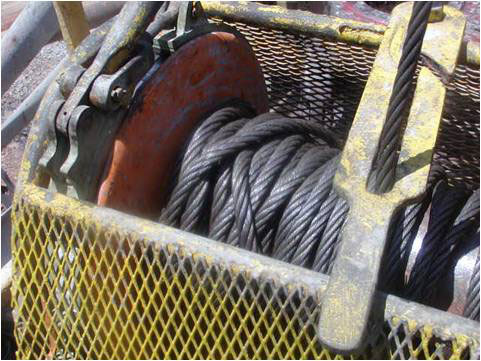
Boatlift cable backlash
Check your winch drum as the cable is winding onto it to avoid slack, misalignment, and uneven wear. Never allow your lift cables to go slack. A slack line will result in damage to the system. It’s like a backlash on a fishing pole, only with a rigid steel cable. It can be challenging to unravel.
Never use a screwdriver or hit the cable with a hammer in an attempt to release the line. You’re almost guaranteed to cause severe damage.
Motors, Gearboxes, and Drive Units
If your boat lift has a motor, examine it for signs of rust or water retention. Ensure that any holes on the top of the motor or winch are closed.
The bottom holes must be open for proper drainage.
Inspect your gearbox and drive units regularly. Check for appropriate alignment, damaged cables, and areas that need lubrication.
Lift beams
Inspect your bunk carpeting for wear and tear and any wood underneath the carpet for cracks and rot. Lift beams should be kept out of the water when not in use. Better yet, get an aluminum/vinyl set and never have to replace the carpeting again.
Keep your hardware tightened, and be sure that the bunks line up correctly with your boat hull.
Storage
If you’re storing your lift in the off-season, remove the battery if you have a power hoist. Store it on a small piece of wood. Store your lift with the cradle or platform to the top.
Your boat lift protects your boat, so it’s essential to keep it in good condition.
Proper care and maintenance can help you avoid costly damage. Your dock and accessories need to be inspected for damage, also. Check your manufacturer’s guidelines for more specific care instructions.
Weight
It’s up to you to stay within the manufacturer’s specifications. Staying within those specs is crucial.
Even lifting a boat with the wrong hull design can cause damage. Never add more weight to your boat while it’s on the lift.
Entering or exiting a boat while it’s on a boatlift can be very dangerous. Ensure you have proper weight distribution when lifting.
Lubrication
Cables are usually made of stainless steel and need lubrication. Regularly apply penetrating oil or chain and cable fluid to reduce abrasion.
Make sure not to use grease on the cables. Grease traps moisture inside the cable strands. However, boat lift motor components and pulleys usually require grease.
Since you’re lubricating your lift, check for damaged cables that need to be repaired, replaced, or tightened.
Water-Related Damage
Boat docks and lifts are still susceptible to water-related damage. Lift beams and bunks can be damaged by a boat coming in “hot.” When docking, check your speed, so you are not going faster than you are willing to hit the dock.
Keep your lift out of the water as much as possible. Small amounts of rust can be ground off and touched up.
Never place a plastic bag or cover over the winch and/or motors in the winter. Condensation will form inside and cause excessive damage.
Alignment
Uneven wear can shorten cable lifespan, so keep an eye on the cable alignment. Make sheave alignment part of your regular inspections. Keep an eye on the winder, drum, and spool.
If you notice a backlashed cable, slack, or other boat lift problems- STOP. Don’t go any further. Adjust the cables immediately. If you’re not sure of the alignment, contact the professionals at PWS.
Reminder – Use leather gloves to protect your hands when handling the cables.
Storage
Even off-season storage can contribute to how long your boat lift lasts. Store your boat lift with the platform up.
If you have a power hoist, remove the battery and store it inside on a small piece of wood.
Signs of Lift Damage
Once the flood or storm has died down, clear any debris off of your dock and lift. Look for bent or twisted beams, damaged drives, or broken bunks on your lift. Look for bent or damaged bolts and loose fasteners.
Check the lift cables for kinks, abrasions, frays, or breaks. Do not operate your lift until those cables are repaired or replaced.
If your boat lift shifted during the storm, realign it and make it square with the dock. When there are high waves, make sure the boat is still in the correct position.
Consult your installation manual or PWS for more information about adjustments. Even if everything looks good, make sure that you perform a test run of your lift. Check for any problems before you get back to boating.
At times large objects, like logs or other debris, strike your boatlift during the night or when you are away. Always look for damage if there was a storm.
ShoreMaster boat lifts are made with premium components. They make the best equipment to protect your boat.
In summary
Invest in the best boat lift brand to protect your boat – ShoreMaster.
Where can you find Pier & Waterfront Solutions?
Pier & Waterfront Solutions, 7325 St. Hwy 57, is located 3 miles south of Sturgeon Bay. Go 1 mile PAST the intersection with County MM (heading north). Look on the right at the intersection of Idlewild Road and Hwy 57.
PWS is

Pier & Waterfront Solutions remains “open” year-round.
The Covid-19 virus is waning thanks to the population getting vaccinations. We hope that the remaining people will get the vaccine to help stop the spread of this deadly virus. We will continue to conduct as much business as possible by email, text, or phone to do our part to keep people safe.
Site visits continue as usual. When making in-person contacts, we follow “social distancing” guidelines when possible by doing any face-to-face contact outdoors.
PWS display yard – OPEN 24-7
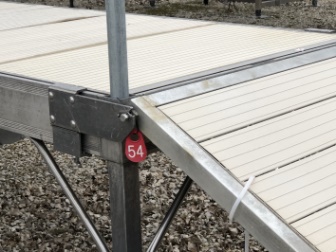
Red Tag
PWS‘s display area is always open for you to examine at your leisure. All displays available for sale have a numbered, red tag on them. Want more information on something you saw in our yard? Please reference that number when you inquire.
PWS provides estimates by email to make the process faster, safer, and paperless.
Call, message, or email Jerry with any questions.

Jerry Englebert
Contact Jerry at 920-493-4404 for more information or use this link.
Jun 22, 2021
Replacement Canopy Covers
Your boat lift is in the water, and you are ready for a great summer of boating. Have you taken your first cruise this year? Yes! It was a great experience – wasn’t it?
That is until you noticed the hole(s) in your canopy cover. Did the last storm cause a tear in your canopy? You can’t ignore it. It’s time to replace your top!
Wait!!
Your previous boat lift dealer went out of business, or you don’t remember what size canopy you need! Contact PWS.
Customer referrals
By now, you’ve heard great comments about Pier & Waterfront Solutions. There are over 100 customer referrals on the PWS website, demonstrating the quality of our work. Those are not some salesperson’s words – they are actual, documented statements.
Testimonials like:
Mike W, Fish Creek
Sorry for the delayed message but I wanted to compliment your crew for the AMAZING dock installation they did this year!
These young men (Alex and Tyler) did the best install I have ever seen! I am a perfectionist, and I could not have done a better job myself! Even the pipes that are across from each other are even in height where in the past the pipes were all at random heights,
We tipped the guys but I wanted you to know what a great job they did! Keep up the great work!! Mike W
Excellent Job
Hi Jerry, Enclosed is payment for the pier haul out this fall ….. They (the crew) did an excellent job under difficult conditions. Will call you next spring for re-installation. Dave W.
Great Job John K Door County
Crews do a great job. John K.
Awesome Service – Casey C.
Jerry, Thank you so much for the AWESOME service! Casey C.
Here’s More
Hi = just wanted to let you know your crew did a great job taking down our dock this year. You are all a pleasure to work with. Thanks David C.
QB Outstanding Project Work
Outstanding project work. Alex is magical on the forklift and Ben is a strong extra. Nice work, it’s exactly as I hoped it would turn out. QB
Dale R. Customer service is an art
Jerry, Customer service is an art. You have mastered the art. Thank you for your service! Dale R.
We appreciate you
Hi Jerry, I just want you to know how much we appreciate everything you do. It is always a pleasure to work with you. Katie R.
I enjoyed talking to Keri
I enjoyed talking with Keri. She is very polite and personable. She relayed exactly what I wanted done and she will do well for your business. Please share this with her. Thanks Michael H
Repair Parts
You also know that PWS can provide replacement parts for almost all dock and boat lift brands. But did you know PWS can provide replacement canopies for every brand of boat lift?
Here’s a complete list of boat lift canopies available:
(alpha order)
-
-
-
-
-
-
-
- Beach King
- Daka
- DockRight
- Floe
- Harbormaster
- Hewitt
- LakeShore
- Newman’s
- Vibo
- Pier Pleasure
- Porta-Dock
- ShoreMaster
- Shorestation
LOVE YOUR BOAT?
Love your boat? Then you want to give it a dry home.
Many boat owners choose ShoreMaster Boat Lift Canopies to protect their boats. The quality and longevity of its products are synonymous with the name – ShoreMaster.
ShoreMaster Boat Lift canopies last for years, giving your boat the protection it needs and deserves.
Due to the quality of a ShoreMaster canopy frame, you don’t have to worry about them. But, the sun does deteriorate all canopy fabrics over time.
Which brands are popular on the Door County Peninsula?
The two popular boat lift brands on the Door County peninsula are ShoreMaster and Shorestation. We’ll concentrate on those.
Measuring for ShoreMaster Canopy Covers
First, it’s important to remember that ShoreMaster has more than one length for each lift. Different fabrics and colors are also available for every model.
Telling us you have a model # SM 4010 lift is not enough. Here is the correct way to measure a replacement canopy for a ShoreMaster boat lift:
- Refer to the diagram below for detailed information on the needed measurements.
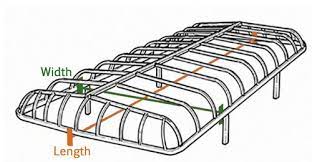
ShoreMaster Canopy Dimensions
Length: Measure from the frame outside edge to the outside edge, along the horizontal centerline. Do not measure up and over the top.
Width: Measure between the inside edges of the frame.
What about the Shorestation brand?
Shorestation lifts will have an extra factor to consider – The metal used on the canopy frame. Shorestation makes canopy frames with either steel or aluminum. It’s important to distinguish between the two before proceeding. The shape and mountings are different.
Older “legacy” models used steel for the frames. Later they began making aluminum boat lifts like the rest of the world.
Now we have the frame material down pat. Now we can ask the remaining questions. We’ll start with the aluminum lifts since they are the most popular.
Shorestation ALUMINUM Canopy Frames
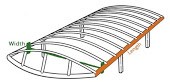
Shorestation Aluminum Canopy Dimensions
Length: Measure the side rail and then add 2 feet to that number
Width: Measure between the inside edges of the frame
Now on to the Steel canopies.
Shorestation STEEL Canopy Frames
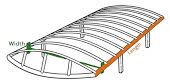
Shorestation Steel Canopy Dimensions
Length: Count the number of inner ribs
Width: Measure between the inside edges of the frame
NOTE: Were there ANY modifications or repairs to the canopy frame? If the answer is yes, it is vital to bring that information to our attention. Changes could result in an error. Custom canopy sizes are not returnable.
Want assurances that the new canopy will fit?
The best option is to have a PWS representative do a site evaluation by coming to your site. That way, you can rest assured that we have the correct information.
Not either brand?
Look for the brand name on the frame or winch of the boat lift and call or send the information to us. Sending a photo helps also.
We will return a diagram of the frames to compare with your actual canopy frame. We will also show you how to take the precise canopy dimensions needed. It’s as simple as that!
If in doubt, ask PWS to send someone out to get the information.
SUMMARY
It’s better to be safe than sorry – Call PWS Today!
Where can you find Pier & Waterfront Solutions?
Pier & Waterfront Solutions, 7325 St. Hwy 57, is located 3 miles south of Sturgeon Bay. Go 1 mile PAST the intersection with County MM (heading north). Look on the right at the intersection of Idlewild Road and Hwy 57.
PWS is
Pier & Waterfront Solutions remains “open” year-round.
The Covid-19 virus is waning thanks to the population getting vaccinations. We hope that the remaining people will get the vaccine to help stop the spread of this deadly virus. We will continue to conduct as much business as possible by email, text, or phone to do our part to keep people safe.
Site visits continue as usual. When making in-person contacts, we follow “social distancing” guidelines when possible by doing any face-to-face contact outdoors.
PWS display yard – OPEN 24-7
Red Tag
PWS‘s display area is always open for you to examine at your leisure. All displays available for sale have a numbered, red tag on them. Want more information on something you saw in our yard? Please reference that number when you inquire.
PWS provides estimates by email to make the process faster, safer, and paperless.
Call, message, or email Jerry with any questions.
Jerry Englebert
Contact Jerry at 920-493-4404 for more information or use this link.