Jan 26, 2024
A Guide to Capacity and Travel
You worked hard to buy the boat of your dreams. When you finally get the time to enjoy it, you don’t want to waste time getting it into the water. That is why so many waterfront owners choose to purchase boat lifts to store their vessel on site. Image the convenience of being in the water in minutes, while also keeping your boat safe and clean.
In order to achieve this, it’s important you choose the right boat lift to ensure the safety and longevity of your vessel. This guide will explore the key factors to consider when selecting a boat lift.
Understanding Capacity
Dry Weight vs. Operating Weight:
The first question you’ll need to answer when looking for a boat lift is, “What is the weight of your boat?” Your first thought will be to check your boats specifications, but there are many factors that contribute to your boats actual weight that are not listed in your boats specifications. The dry weight listed for boats often excludes outboard motors, fuel, fluids, gear, and accessories. You will need to consider the combined weight of these additional items when choosing lift capacity.
- Adding a 20% buffer to the total weight provides a safe margin for unforeseen variations.
- Overestimating capacity is wise if you plan to upgrade to a heavier boat in the future.
People and Cargo:
We know your time is limited and you want to spend as little time getting onto the water as possible. Storing your gear right on the boat is one of the biggest advantages of having your boat stored on site. You may not realize how much additional weight even the most typical items can add to your vessel. Now add a passenger or two. As you board your boat, you want to ensure easy access, especially for those who might not get around as easily anymore. To safely do this, you want to make sure you have taken these extra pounds into account.
- As per manufactures, boat lifts are not meant to carry people while in operation. Be sure to load and unload passengers with minimal time spent on the lift.
- As per manufactures, pontoon boats are not suitable as recreational decks while on the lift. With the proper increase in capacity, you could feel safer enjoying your boat even when it’s docked.
- Overloading the lift can cause serious injuries, and damage to both the boat and the lift itself.
Understanding Travel
The travel of a boat lift refers to the distance from its lowest position to its highest position. When the lift is in its highest position, you want to make sure the keel of your boat is high enough out of the water to avoid wave action. At its lowest position, you want to make sure you have enough water depth to freely float your boat off the lift.
Wave Action:
- Areas with strong waves necessitate a lift that elevates your boat sufficiently.
- Some lifts offer extended lifting ranges for optimal clearance in challenging conditions.
- Specific brands allow you to move small watercrafts away from the water entirely.
Water Depth:
- Knowing your water depth is crucial for selecting the appropriate lift type.
- Every body of water has daily and seasonal fluctuations, make sure you know the highs and the lows of your particular body of water.
- Shallow water may require a lift specifically designed for low water conditions.
- The lift’s minimum depth requirement needs to accommodate the draft of your boat.
Popular Boat Lift Options
Everyone’s needs are unique to their slice of paradise and the equipment they use. That’s why we have partnered with the industries top boat lift manufactures, so that we can provide a boat lift solution that fits your needs.

Offers cable and hydraulic lifts with capacities ranging from 1,200 lb to 12,500 lb.
Cable lifts have a 5’6” lifting range and require 12″ of water depth plus the boat’s draft.
Hydraulic lifts offer up to 5’ of lifting range and require 18″ of water depth plus the boat’s draft.

Offers hydraulic lifts with capacities ranging from 2,000 lb to 30,000 lb.
Hydraulic lifts have a maximum 6’6” of lifting range, ideal for areas with strong waves.
Lifts can be adapted for extremely low water levels with their shallow water kit.
PWS offers Swinger lifts and Elevator lifts with capacities ranging from 1,500 lb to 16,000 lb.
Swinger lifts have a travel range of 8’6” and Elevator lifts have a customizable travel range.
Swinger lifts have the ability to rotate your craft 180° to move it away from the water completely.
Elevator lifts can operate at a 45° angle, making them ideal for overcoming obstacles.
Professional Assistance
PWS: Your Trusted Boat Lift Partner
Choosing the right boat lift can be complex, seeking professional assistance is recommended. PWS offers a comprehensive selection of ShoreMaster, SunStream and Davit Master boat lifts to meet your specific needs. Our experienced team can help you choose the right lift for your boat, water depth, and wave conditions.
Contact us today at (920) 493-4404 for a free consultation.
Additional Resources:
Sep 14, 2021
Are you a Pro with a Pontoon Boat?
Pontoon boats are a relaxing way to enjoy boating any season of the year.
It’s Fall, and there are still days when you will wish you could be out on a pontoon boat. It might be a little cooler, but after the hot summer, it will be refreshing.
Pontoon Boats are unique
Pontoon boats have their own style with many amenities available. These boats are different in many ways from a normal powerboat. Handling them is another animal to tackle. Check out this article to get the most use of your pontoon boat.
Docking and Undocking
Pontoon boats leave the dock like any other vessel on the water. Yet, their body shape creates more surface area for the wind to push around. It amounts to a “giant sail.”, the tubes and vertical fences found around the deck act as a sail.
Adding to that difficulty are the boat tubes, which provide your floatation. Large gusts of wind are your mortal enemy. They can knock you off course on the water. The ability to push your pontoon into other boats means you need to know how to handle a pontoon boat. Plus, you must have stellar insurance coverage. SEE
To counter the winds, you have to be aware of them at all times. The pontoon boat’s secret is its exceptional control when used with short bursts of power. Regardless of what type of boat you use, idle the engine and point the motor in the direction you want to go. Then shift into gear. Next, use short bursts of power as you steer the boat. Before you know it, you’ll be out of the dock.
You’ll use the same understanding of the wind and maneuvers when heading back into the marina. Docking any powerboat (pontoons included) requires a little more side-to-side motion. You can learn more about these actions via this link.
Beaching
Beaching or mooring your boat to swim is half the fun of boating, no matter what type of vessel you own. People love beaching their boats to explore islands or soak up the sun. Luckily, both are simple processes and the same for every type of powerboat.
Start by traveling slow when you hit shallow waters, so you don’t damage your motor. Beaching requires you to push the front end of your vessel onto land. Do this carefully to prevent damage to the tubes.
Don’t head onto the beach too far; allow enough room to spin the boat around out into the water using the motor.
For mooring, make sure you have the proper tools to secure your boat via the anchor. Pontoon boats are more buoyant, so use fenders to protect your boat from other vessels.
Turning and Handling
Pontoon boats soar across the water, which makes handling them a ton of fun. Before you lose yourself in the moment, remember that there are no lanes out on the water. Always check your surroundings before making a turn or spinning your boat around.
With that safety tip in mind, you’re ready to tackle the water. Pontoon boats are very stable. You don’t have to worry about flipping or rolling the boat over in normal conditions.
But rough waves and tight turns mean you can’t rule out the possibility. Still, it isn’t much of a concern for the modern pontoon boat.
You do have to worry about causing the propeller to leave the water when making a tight turn. You can either back off of the turn, deaccelerate or trim the engine downwards to remedy the issue. When making sharp turns, equipment and people on your deck are likely to be tossed to one side depending on the speed. Do they have life preservers?
Acceleration
Once you hit open waters, you’re ready to pick up speed. Don’t treat your pontoon boat like a race car, though. Instead, speed up steadily until you reach your desired speed. Keep in mind that the bow will level out, which means you’ll need to trim the engine if you want more speed.
Your engine might rise too far out of the water as you speed up. That’s normal and easy to fix by trimming the motor. Your boat may slow down, and you’ll hear a howling sound near the propeller. Or, the boat will lose a little stabilization when this happens.
Keep in mind that every boat comes with a manufacturer’s recommendation for top speeds or RPM. Most recommend 75% of fully open throttle. It helps to read up on this statistic before pushing your boat to its limits. Use less throttle for more fuel efficiency.
Keep in mind that more crowded waters demand slower speeds. There are rarely legal speed limits on open water, so be mindful of other boaters in the area. Keep an eye out for swimmers as you approach other boats or the shoreline.
Stability Tips in Rough Waters
A pontoon boat handles well, even in rough water, thanks to its dual or triple hull design. Yet, even with the added help, you need to drive a pontoon boat carefully in these conditions.
Experienced boaters recommended that you keep an even load on board. To do this, you must include both objects and passengers. When rough waters arise, make sure your passengers know to even out their weight on deck and sit down. Don’t forget to make them wear life preservers for their safety. The larger your boat, the easier this is to maintain.
Try to avoid heading straight into giant waves. Excessive splashing could damage the electronics in your boat if they take on water. If you must head nose-first into oncoming waves, trim the engine down to help keep the boat’s nose/bow upward. Otherwise, take the waves at a 30 to 40-degree angle.
Finally, sports handling packages are an enormous benefit here. These include better nosecones, power-assisted steering, and higher horsepower to combat choppy waters.
Become a Pro
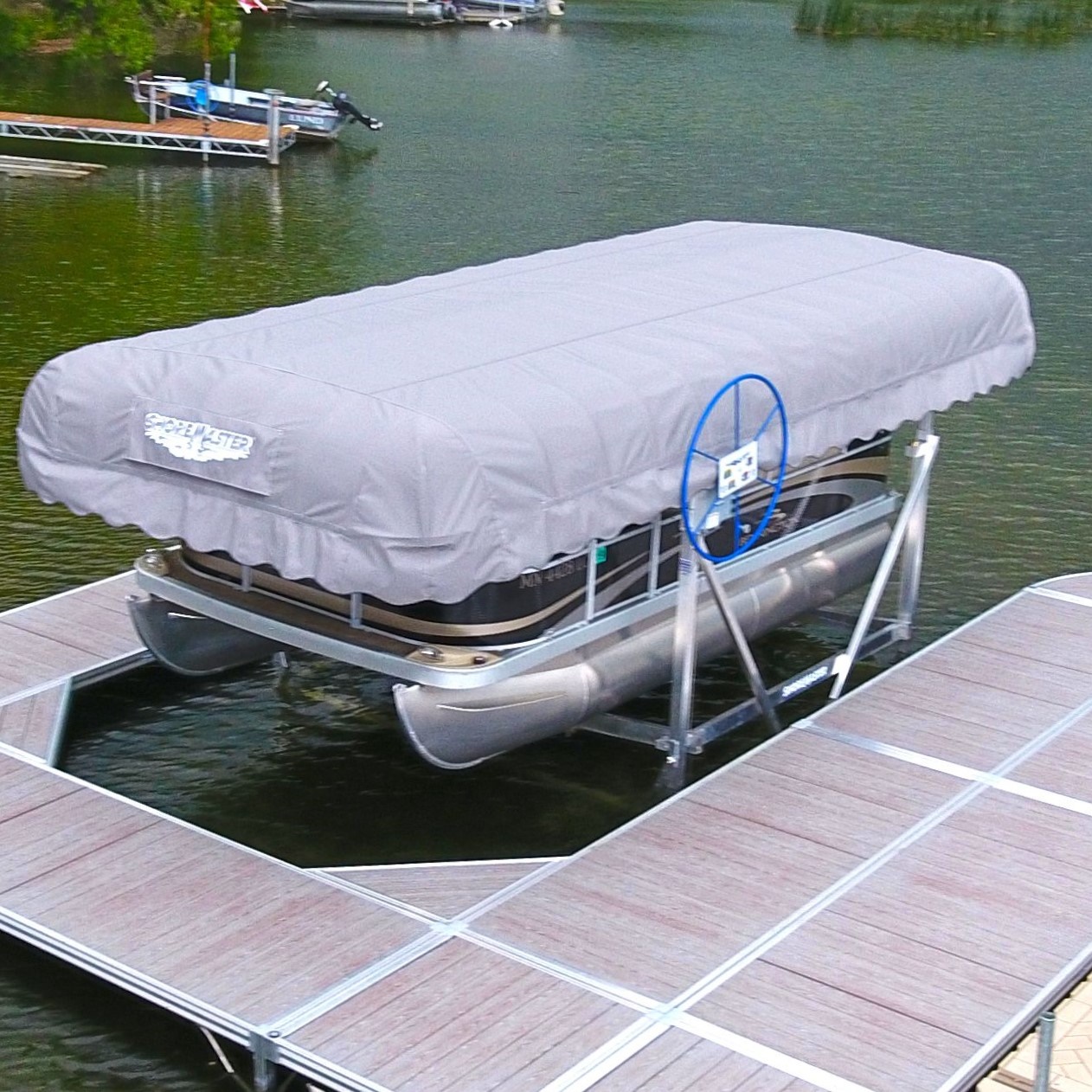
Pontoon Boat Lift
That means don’t head out onto the water when you know a storm is on the way. A pontoon boat is an investment you don’t want to risk for a few more minutes of fun. If inclement weather strikes, head back to the dock and put your boat back on your lift.
Where is Pier & Waterfront Solutions?
Located at 7325 St. Hwy 57, it’s 3 miles south of Sturgeon Bay and 1 mile past the intersection of Cty MM (heading north). Look on the right side, one mile north, at the next corner (Idlewild Road and Hwy 57).
For your protection PWS implemented these preventive measures:
1. Conducting as much business as possible by email, text, or phone.
2. Site visits will continue. When in-person contacts are necessary, we will follow “social distancing” guidelines.
3. Our display yard is always open for you to examine at your leisure. All displays have a numbered, red tag on them. If you want more information or pricing, please reference that number.
Thank you for allowing us to work with you.
YES – PWS is OPEN and waiting for you!
Please call, message, or email PWS with any questions.
Let’s all stay safe!
Jun 22, 2021
Replacement Canopy Covers
Your boat lift is in the water, and you are ready for a great summer of boating. Have you taken your first cruise this year? Yes! It was a great experience – wasn’t it?
That is until you noticed the hole(s) in your canopy cover. Did the last storm cause a tear in your canopy? You can’t ignore it. It’s time to replace your top!
Wait!!
Your previous boat lift dealer went out of business, or you don’t remember what size canopy you need! Contact PWS.
Customer referrals
By now, you’ve heard great comments about Pier & Waterfront Solutions. There are over 100 customer referrals on the PWS website, demonstrating the quality of our work. Those are not some salesperson’s words – they are actual, documented statements.
Testimonials like:
Mike W, Fish Creek
Sorry for the delayed message but I wanted to compliment your crew for the AMAZING dock installation they did this year!
These young men (Alex and Tyler) did the best install I have ever seen! I am a perfectionist, and I could not have done a better job myself! Even the pipes that are across from each other are even in height where in the past the pipes were all at random heights,
We tipped the guys but I wanted you to know what a great job they did! Keep up the great work!! Mike W
Excellent Job
Hi Jerry, Enclosed is payment for the pier haul out this fall ….. They (the crew) did an excellent job under difficult conditions. Will call you next spring for re-installation. Dave W.
Great Job John K Door County
Crews do a great job. John K.
Awesome Service – Casey C.
Jerry, Thank you so much for the AWESOME service! Casey C.
Here’s More
Hi = just wanted to let you know your crew did a great job taking down our dock this year. You are all a pleasure to work with. Thanks David C.
QB Outstanding Project Work
Outstanding project work. Alex is magical on the forklift and Ben is a strong extra. Nice work, it’s exactly as I hoped it would turn out. QB
Dale R. Customer service is an art
Jerry, Customer service is an art. You have mastered the art. Thank you for your service! Dale R.
We appreciate you
Hi Jerry, I just want you to know how much we appreciate everything you do. It is always a pleasure to work with you. Katie R.
I enjoyed talking to Keri
I enjoyed talking with Keri. She is very polite and personable. She relayed exactly what I wanted done and she will do well for your business. Please share this with her. Thanks Michael H
Repair Parts
You also know that PWS can provide replacement parts for almost all dock and boat lift brands. But did you know PWS can provide replacement canopies for every brand of boat lift?
Here’s a complete list of boat lift canopies available:
(alpha order)
-
-
-
-
-
-
-
- Beach King
- Daka
- DockRight
- Floe
- Harbormaster
- Hewitt
- LakeShore
- Newman’s
- Vibo
- Pier Pleasure
- Porta-Dock
- ShoreMaster
- Shorestation
LOVE YOUR BOAT?
Love your boat? Then you want to give it a dry home.
Many boat owners choose ShoreMaster Boat Lift Canopies to protect their boats. The quality and longevity of its products are synonymous with the name – ShoreMaster.
ShoreMaster Boat Lift canopies last for years, giving your boat the protection it needs and deserves.
Due to the quality of a ShoreMaster canopy frame, you don’t have to worry about them. But, the sun does deteriorate all canopy fabrics over time.
Which brands are popular on the Door County Peninsula?
The two popular boat lift brands on the Door County peninsula are ShoreMaster and Shorestation. We’ll concentrate on those.
Measuring for ShoreMaster Canopy Covers
First, it’s important to remember that ShoreMaster has more than one length for each lift. Different fabrics and colors are also available for every model.
Telling us you have a model # SM 4010 lift is not enough. Here is the correct way to measure a replacement canopy for a ShoreMaster boat lift:
- Refer to the diagram below for detailed information on the needed measurements.
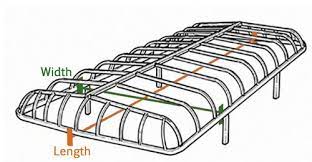
ShoreMaster Canopy Dimensions
Length: Measure from the frame outside edge to the outside edge, along the horizontal centerline. Do not measure up and over the top.
Width: Measure between the inside edges of the frame.
What about the Shorestation brand?
Shorestation lifts will have an extra factor to consider – The metal used on the canopy frame. Shorestation makes canopy frames with either steel or aluminum. It’s important to distinguish between the two before proceeding. The shape and mountings are different.
Older “legacy” models used steel for the frames. Later they began making aluminum boat lifts like the rest of the world.
Now we have the frame material down pat. Now we can ask the remaining questions. We’ll start with the aluminum lifts since they are the most popular.
Shorestation ALUMINUM Canopy Frames
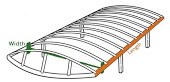
Shorestation Aluminum Canopy Dimensions
Length: Measure the side rail and then add 2 feet to that number
Width: Measure between the inside edges of the frame
Now on to the Steel canopies.
Shorestation STEEL Canopy Frames
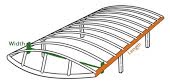
Shorestation Steel Canopy Dimensions
Length: Count the number of inner ribs
Width: Measure between the inside edges of the frame
NOTE: Were there ANY modifications or repairs to the canopy frame? If the answer is yes, it is vital to bring that information to our attention. Changes could result in an error. Custom canopy sizes are not returnable.
Want assurances that the new canopy will fit?
The best option is to have a PWS representative do a site evaluation by coming to your site. That way, you can rest assured that we have the correct information.
Not either brand?
Look for the brand name on the frame or winch of the boat lift and call or send the information to us. Sending a photo helps also.
We will return a diagram of the frames to compare with your actual canopy frame. We will also show you how to take the precise canopy dimensions needed. It’s as simple as that!
If in doubt, ask PWS to send someone out to get the information.
SUMMARY
It’s better to be safe than sorry – Call PWS Today!
Where can you find Pier & Waterfront Solutions?
Pier & Waterfront Solutions, 7325 St. Hwy 57, is located 3 miles south of Sturgeon Bay. Go 1 mile PAST the intersection with County MM (heading north). Look on the right at the intersection of Idlewild Road and Hwy 57.
PWS is

Pier & Waterfront Solutions remains “open” year-round.
The Covid-19 virus is waning thanks to the population getting vaccinations. We hope that the remaining people will get the vaccine to help stop the spread of this deadly virus. We will continue to conduct as much business as possible by email, text, or phone to do our part to keep people safe.
Site visits continue as usual. When making in-person contacts, we follow “social distancing” guidelines when possible by doing any face-to-face contact outdoors.
PWS display yard – OPEN 24-7
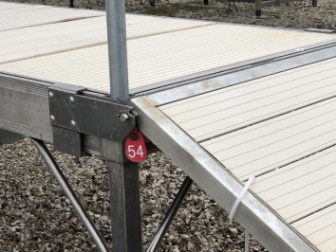
Red Tag
PWS‘s display area is always open for you to examine at your leisure. All displays available for sale have a numbered, red tag on them. Want more information on something you saw in our yard? Please reference that number when you inquire.
PWS provides estimates by email to make the process faster, safer, and paperless.
Call, message, or email Jerry with any questions.

Jerry Englebert
Contact Jerry at 920-493-4404 for more information or use this link.
Jun 8, 2021
BoatLift Accessories Make Life Simple
Summer fun starts and ends at your dock and boat lift. Here, all your summer waterfront activities begin. Make your dock and boat lift look great and perform effortlessly.
There is no need to struggle to bring your boat back into your lift. PWS has the equipment to make life easier for you.
PWS features a full line of ShoreMaster boat lift accessories. We have a wide range of accessories to customize your dock and boat lift and fit your needs. Here are a few of the most popular solutions for your boat lift.
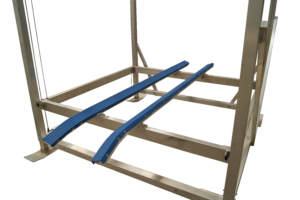
Vinyl Bunks
Aluminum and Vinyl Bunks
PWS offers top-of-the-line, vinyl-covered aluminum bunks that protect your boats hull. With vinyl-covered bunks, you’ll never have torn, unsightly carpeting to replace.
Vinyl does not hold the sand and debris like carpeting does and never needs replacement. Vinyl bunks protect your hulls’ finish and make a great boat lift accessory.
Is it time for you to step up? Contact Jerry now @ 920-493-04404
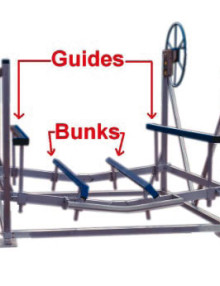
Bunks & Guide accessories
Guides and Rails
PWS also offers bow or full-length guides to hold your boat in the proper lifting position. The guides and rails make it much easier to control your boat in the waves.
The bow guide keeps your boat from overrunning the lift to ensure that it’s properly aligned. Waves will no longer push you too far forward on the boatlift.
You’re always appropriately balanced on the lift rack. See also.
Full-length guides mount on the lift rack to help you center the boat. Never get washed into the frames again. More importantly, the boat remains correctly centered at all times.
The boat guide and full-length guide use high-quality marine aluminum alloys and offer durability and protection for your watercraft.
For pontoon boat owners, we offer a welded aluminum rail kit option. They fit your craft’s unique shape.
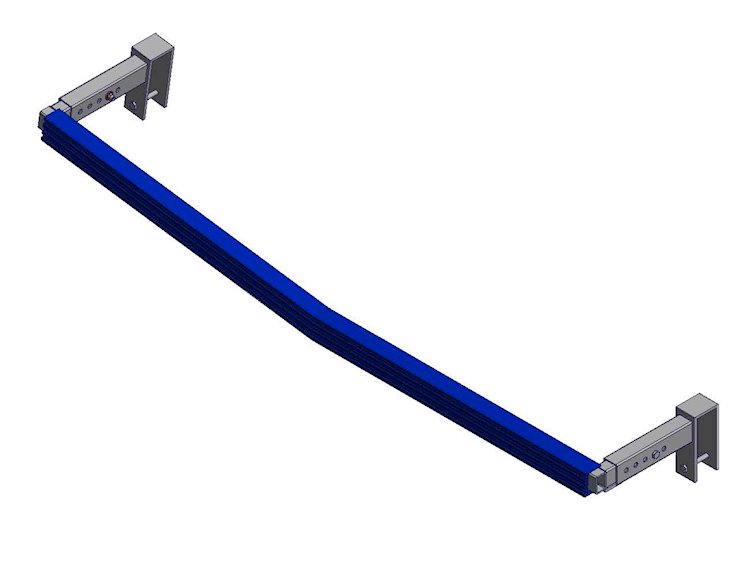
Adjustable Motor Stop
Motor Stops
Keep your boat from advancing too far into the lift by installing a motor stop. Motor stops let you position your boat on the lift with ease. This stop keeps your boat correctly balanced on the lift frames.
Isn’t time to call 920-493-4404?
Adjustable Bow Stop
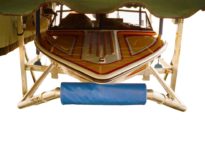
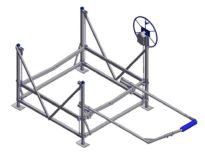
Bow Guide Accessory
Here’s another alternative to keep your boat in the correct position. The adjustable Bow Stop accessory prevents you from overrunning your boat lift. The cushioned bumper on the frame prevents damage to your boat. You’ll always be in the exact position for storing your boat.
The bow stop or the motor stop will make your life easier. Call Jerry today!
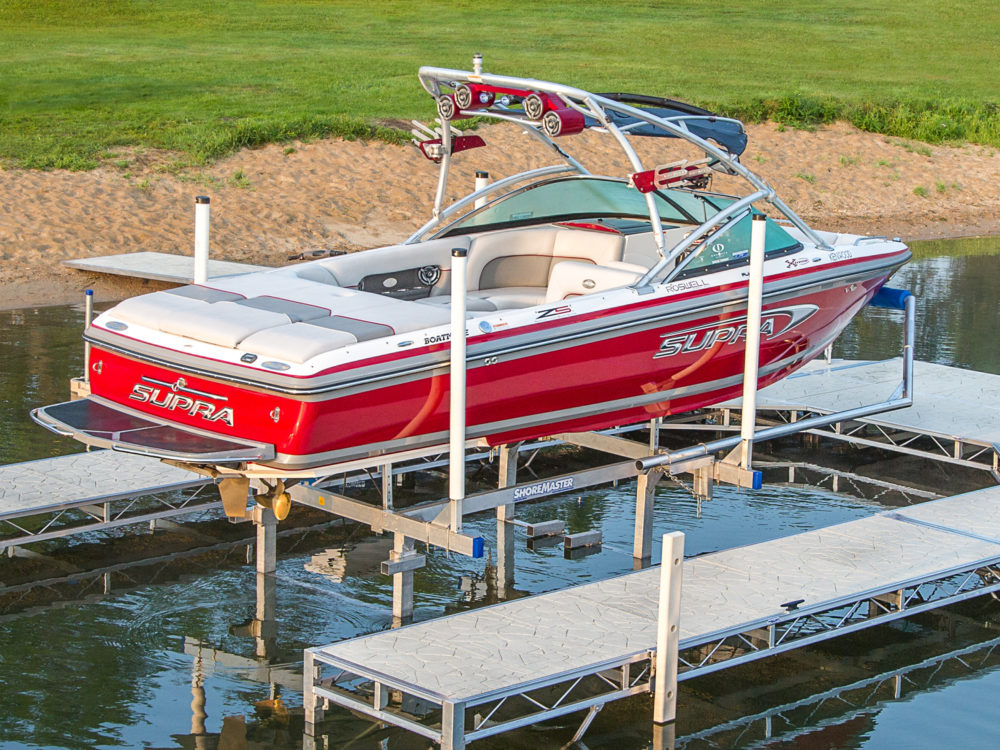
PVC Guide on-Single set
PVC Vertical Guide-On
A PVC vertical guide-on makes it easier to align and position your watercraft on the boat lift. The PVC guide-on means there is no maintenance. These guides allow your boat to slide along drive the boat rub rail to prevent touching the hull or marring the gel coat or decals. They gently push you back into position as the PVC turns. They are available in single or Double units.
Battery Box Holders & Trays
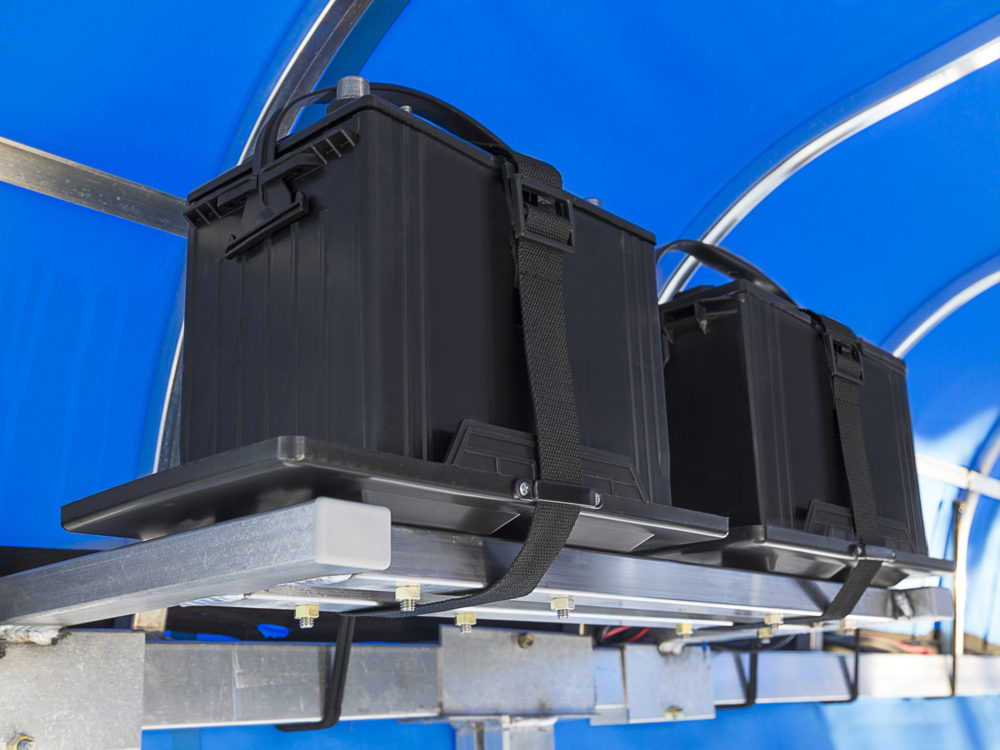
Battery box tray accessory
Keeping your batteries out of the way is vital for safe and convenient operation. Never let a battery sit unprotected on your dock where children can touch them.
The battery tray mounts to the frame on the lift leg or a canopy frame. You’ll have a clean, clutter-free look with the batteries stored in the proper cases
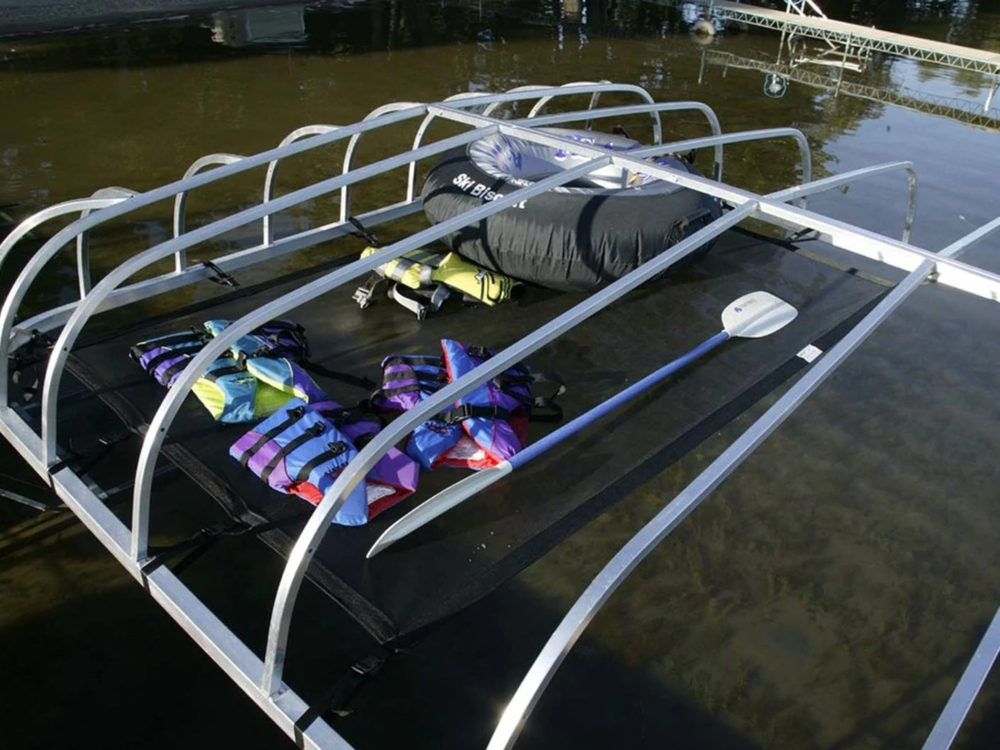
Canopy Lift Loft
Canopy Lift Lofts
The universal size loft fits any canopy system. A loft can help keep your boating accessories dry and out of the way. The mesh is breathable and coated to inhibit mold growth. They are a great place to store your life preservers, canoe or kayak paddles, and more. Keep them handy, safe, and dry.
You’ll never have to find someone to carry your equipment to the boat again.
Contact Jerry at 920-493-4404 for more information or use this link for more information.
Where can you find Pier & Waterfront Solutions?
Pier & Waterfront Solutions, 7325 St. Hwy 57, is located 3 miles south of Sturgeon Bay. Go 1 mile PAST the intersection with County MM (heading north). Look on the right at the intersection of Idlewild Road and Hwy 57.
PWS is
Pier & Waterfront Solutions remains “open” year-round.
The Covid-19 virus is waning. We hope people will continue to get the vaccine to help stop the spread of this deadly virus. We will continue to conduct as much business as possible by email, text, or phone to do our part to keep people safe.
Site visits continue as usual. When making in-person contacts, we follow “social distancing” guidelines when possible by doing any face-to-face contact outdoors.
PWS display yard – OPEN 24-7
Red Tag
PWS‘s display area is always open for you to examine at your leisure. All displays available for sale have a numbered, red tag on them. Want more information on something you saw in our yard? Please reference that number when you inquire.
PWS provides estimates by email to make the process faster, safer, and paperless.
Call, message, or email Jerry with any questions.
Jerry Englebert
Contact Jerry at 920-493-4404 for more information or use this link.
Apr 13, 2021
What is the BEST hydraulic boat lift for Green Bay & Lake Michigan?
Want the BEST hydraulic boat lift for Green Bay waters? Look no further than the latest addition to Pier & Waterfront Solutions premier lines. PWS now features Sunstream SunLift™ hydraulic lifts.
Pier & Waterfront Solutions recently diversified the selection of hydraulic lifts. You now have a choice of hydraulic lifts with capacities up to 30,000 lbs. and lifting heights to 6′-6″.
What does this mean for you?
Want the fastest, free-standing hydraulic lift with the greatest lifting height and smoothest operation? Check out Sunstream SunLift.™
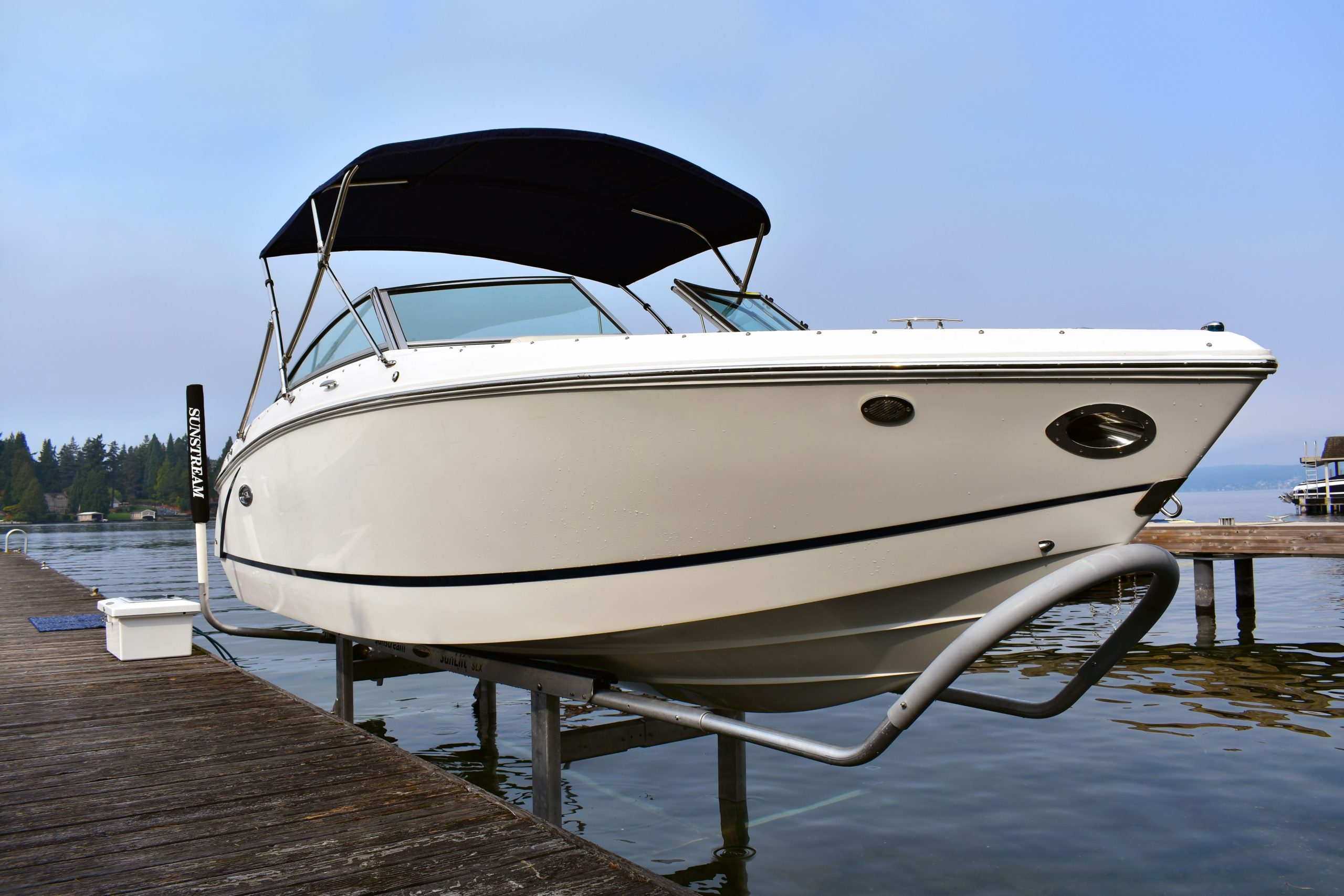
Sunstream SunLift Hydraulic boat lift
Here’s a side-by-side comparison of the three most popular brands:
HYDRAULIC BOAT LIFTS
Sunstream ShoreMaster Shorestation
Capacity – 2,000 – 30,000# 4,000–12,500# 2,000–15,000 #
Lifting Height – 36″- 78″ 36″– 60″ 70″
Min. Depth* – 12″ 12″ 14″-21″
Wireless Remote – Y Y Y
Inside Width – > Boat width 108” – 132” 108” – 144”
Cables Used? NO NO YES
*Plus the draft of the boat
Ease of operation
Today you can use your boat as easily as you use your car. Get out on the water more often, and have more fun.
Sunstream has wireless remote controls and optional motor-stop and guide-on systems. These features make operating and docking easy even for a new skipper. There are NO Cables Used.
Sunstream pioneered the hydraulic, free-standing boat lift revolution. They continue to advance the technology and is known for reliability, durability, and safe design.
Sunstream SunLift™ has been proven with years of service in salt and freshwater environments. Sunstream has a wide range of accessories to optimizes the lift for your specific needs.
We’ll have more details in the coming weeks.
Where is Pier & Waterfront Solutions?
Pier & Waterfront Solutions, 7325 St. Hwy 57, is located 3 miles south of Sturgeon Bay. Go 1 mile PAST the intersection with County road MM (heading north). Look on the right at the next corner – Idlewild Road and Hwy 57.
Is PWS OPEN?
Pier & Waterfront Solutions remains “open” year-round.
Please use face masks
The Covid virus continues to spread and affects many people. Don’t be one of them.
PWS is conducting as much business as possible by email, text, or phone.
Site visits continue as usual. When making in-person contacts, we follow “social distancing” guidelines when possible.
PWS display yard – OPEN 24-7
PWS‘s display area is always open for you to examine at your leisure. All displays available for sale have a numbered, red tag on them. Want more information on something you saw in our yard? Please reference that number when you inquire.
Red Tag
PWS will provide estimates by email to make the process faster, safer, and paperless.
Call, message, or email us today with any questions.
Call Jerry at 920-493-4404 for more information or use this link.